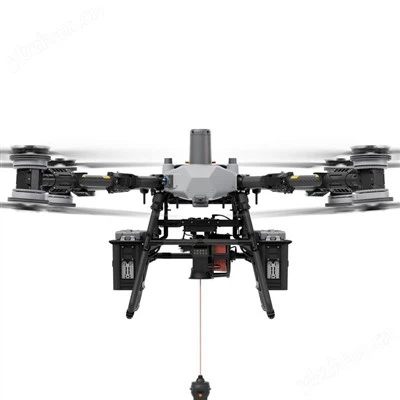
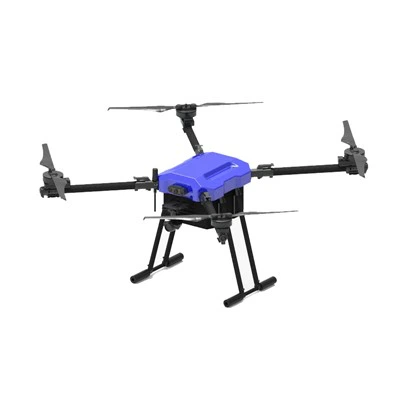
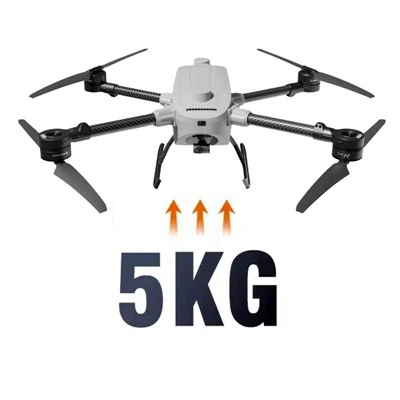
Your Professional Drone Parts Manufacturer & Supplier
Hong Kong Intlbit Group Limited is a high-tech enterprise specializing in the research, development, production, and sales of unmanned aerial vehicles. Since its establishment, it has provided standardized, intelligent, industrial-grade UAV products, solutions, and services to global clients. Headquartered in Suzhou with its R&D center in Beijing, Hong Kong Global Intelligent Technology's business network covers more than 170 countries and regions.
-
![Drone Parts and Accessories]() Drone Parts and Accessories
Drone Parts and AccessoriesThis fire extinguisher thrower(drone parts and accessories) is compatible with T70 & T100 drone platforms and can be used for emergency supply airdrops, solving the challenges of early detection...
-
![Agriculture Drone Components]() Agriculture Drone Components
Agriculture Drone ComponentsThe integration of a relay module significantly enhances the operational capability of modern agricultural drones, particularly for agriculture drone components like the Agras series (T40, T25,...
-
![Low Noise Drone Propellers]() Low Noise Drone Propellers
Low Noise Drone PropellersThe white UV-resistant low noise drone propellers (model 5413) are designed for the harsh environments of modern precision agriculture, setting a new benchmark for reliability and efficiency for...
-
![Drone Transport Box]() Drone Transport Box
Drone Transport BoxThe drone transport box is an airborne dropping box for logistics transportation and supplies delivery. It is made of aviation aluminum and carbon fiber material with high-strength, lightweight...
-
![Pro-best Thermal Imaging Drone]() Pro-best Thermal Imaging Drone
Pro-best Thermal Imaging DroneThe S200 is a pro-best thermal imaging drone, it is an upgraded replacement of DJI 30T. It has omnidirectional AI obstacle avoidance, employing image transmission frequency hopping technology and...


Why Choose Us
Advanced Manufacturing Capabilities
We operate three production bases and six workshops covering carbon fiber components, metal processing, wire forming, and full system assembly. This integrated setup allows us to maintain strong advantages in quality control, cost efficiency, and production consistency.
PSDK Development Expertise
Our R&D team includes senior engineers with experience from leading companies such as DJI, Huawei, and Parrot. With a strong focus on industrial heavy-payload drone applications, the team brings solid expertise in DJI PSDK-based system development.
Professional Training Services
We provide tailored training programs based on customer needs, covering delivery drones, FPV drones, and agricultural drones. To support faster learning, we also supply standardized online video tutorials to help users quickly master operation and maintenance skills.
Customized Solutions
We deliver end-to-end customized solutions for industries such as logistics, firefighting and rescue, power line inspection, high-altitude cleaning, and agricultural protection. Our services range from equipment selection and configuration to full system integration and deployment.
Specification
|
Model No. |
ZK-X7 |
Flight distance |
5-10km |
|
Folded size |
26.8×23.3×4.2cm |
Motor |
BLDCM #2807 KV1305 |
|
Payload |
3kg |
Battery |
22.2V 6S 5000mAh |
|
Diagonal distance |
30.2cm |
Flight speed |
140km/h |
|
Drone weight |
505g (exclude battery) |
Thermal imaging lens |
256*192 resolution |
|
ESC |
4-in-1 32 bit 55A |
VTX |
1.6W / 2.5W / 3W 5.8G / 1.2G (Optional) |
|
Propeller |
7 blades,7-inch |
Receiver |
ELRS 2.4G/915M |
|
Battery life |
No-Payload≈30min / 1.5kg Payload≈11min / 3kg Payload≈6min |
||
|
X serial models available |
Model X3,X5,X7,X10,X13,X15 (contact us for more details) |
||
Advantages of Drone Parts
Lightweight and High Rigidity: Achieves both drone weight reduction and stable flight.
High Weatherability: Offering high durability with minimal UV degradation.
Low Water Absorption: Hardly affected by outdoor humidity.
High Heat Resistance: Less deformation and strength reduction due to heat compared to other materials.
Thin-Walled Molding Possible: Can be produced by mold forming even for drone blades.
Types of Drone Parts
The frame or chassis is the body of the drone and is the component that serves the function of holding all the parts together. Therefore, each of the parts of a drone are attached to it according to a configuration that allows the UAV to have an excellent aerodynamic performance.
It functions as the structure of a drone that allows all the components to be assembled and is usually the one that defines the size of the drone.
The arms of a drone are the components that support the motors and are attached to the frame or base structure of the drone. Long arms offer greater stability, while short arms allow for better manoeuvrability. In some cases, the arms are part of the drone's base structure or frame, so they are not counted as separate parts.
Another element of a drone that is of great importance is the motors. They are the fundamental parts that help keep the drone up and running. The motors of a drone are located at the ends of each of the arms of the frame and are responsible for generating the propulsive force for the drone to soar.
The motors do not have the capacity to lift the drone on their own, as they must be connected to propellers that are in charge of rotating to provide lift to the drone. Therefore, each motor has one or two propellers that together make up the powertrain.
Most drones have a pair of standard propellers, which rotate counterclockwise, and a pair of reverse propellers. This provides greater stability during flight.
The motors as well as the other electrical and electronic components of the drone need power to operate, which they get from a battery that is located in the frame. There are various types of batteries for drones, although the most common are Li-po batteries, which offer great performance and autonomy in flight.
One of the most important parts of a drone is the controller board (not to be confused with the identification plates or number plates of a drone) which acts as the “brain” of the UAV. This drone flight controller is responsible for receiving and recording all the information coming from the controller, the geolocation system, the sensors and other interconnected elements, while sending the necessary signals to control the drone's movements during flight.
Other components of great relevance to the control of the drone, such as the compass, gyroscope and sensors, are usually located on this board.
Although not all drones have the same components, they usually have a number of sensors that are important for the drone's performance. These include:
• Speed sensor: This allows the speed at which the drone is moving to be determined by interpreting the air pressure impacting the device.
• Height and altitude sensors: These sensors use pressure variation to detect how high the drone is flying in relation to the ground, and its position in relation to sea level. This data is of great importance in order to maintain the maximum altitude at which a drone can fly, in accordance with current EASA drone regulations.
• Position sensors: These allow the drone's position to be known in real time, through connectivity with GPS or any other global positioning system.
The camera is one of the most important parts of a drone when used for aerial photography or drone filming. Although not all drones have this element, it is one of the most common accessories, so the body of the drone usually has the necessary structure to install a camera on its base.
This part of the drone is essential for stabilising the camera during drone flight. It is a complement that is placed between the frame and the camera, to prevent the vibrations of the motors from affecting the quality of the images captured with the drone.
Variable Speed Drives or Speed Controllers
Also known as ESC (Electronic Speed Controllers). These components help to improve the flight experience, as they allow you to vary the speed and direction in which the drone moves in a simple way.
The control station usually consists of 3 elements or controls of a drone, including the radio transmitter and receiver, the data management components and the remote control. The remote control is one of the components that you will need to familiarise yourself with when you are learning how to fly a drone for the first time, as it will be the one that allows you to control the drone precisely.
This is one of the most important parts to ensure the integrity of the drone when it comes into contact with the ground. The landing gear is a structure that goes on the bottom of the drone, which allows you to maintain an adequate distance between the body of the drone and the ground. This is essential for drones that carry some kind of suspended load, such as a camera, an irrigation system, spraying or any other complement that is required to execute the main uses of professional drones.
There are other types of parts of a drone that are not commonly installed in the UAV, but are incorporated additionally depending on the activity to be carried out. Such is the case of cargo drones or drones used to perform light shows with drones, to which add-ons are installed to allow the activity to be carried out normally.
Common Materials in Drone Parts Manufacturing
Properties:
Lightweight: Carbon fiber polymers are significantly lighter than metals, which is crucial for enhancing flight efficiency.
High Strength and Stiffness: These materials offer excellent tensile strength and stiffness, allowing them to maintain structural integrity under various loads.
Corrosion Resistance: Carbon fiber reinforced polymers (CFRP) are stable in high-temperature environments and corrosion-resistant.
Applications:
Fuselage and Frame: Used for the primary structure of the drone.
Wings and Rotors: Ideal for components that require a combination of strength and lightweight characteristics.
Landing Gear: Provides durability while minimizing weight.
Properties:
Lightweight and Strong: Aluminum alloys are lighter than steel but offer comparable strength, making them suitable for structural components.
Good Electrical and Thermal Conductivity: This benefits components that require heat dissipation.
Corrosion Resistance: Aluminum naturally forms a protective oxide layer, enhancing its durability.
Applications:
Fuselage and Wing Structures: Commonly used for the drones' main body and wings.
Landing Gear and Control Surfaces: Provides a balance of strength and weight for these critical components.
Properties:
Cost-Effective: Often more affordable than advanced composites, making it suitable for prototypes.
Ease of Processing: This can be easily molded into various shapes, simplifying manufacturing.
Waterproof: Its closed-cell structure provides excellent insulation and buoyancy.
Applications:
Airframe Construction: Used in the initial stages of drone design and testing.
Structural Components: Often combined with other materials for added strength and insulation.
Properties:
High Impact Resistance: Polycarbonate can withstand significant impacts, making it ideal for protective components.
Transparency: Allows for the integration of cameras and sensors without obstructing visibility.
UV Resistance: Resists degradation from prolonged exposure to sunlight.
Applications:
Canopies and Housings: Protect sensitive electronics and provide visibility for cameras.
Camera Mounts: Ensures durability while maintaining optical clarity.
Properties:
Lightweight and Tough: Offers good impact resistance and flexibility, making it suitable for various drone parts.
Temperature Resistance: Maintains performance in a range of temperatures.
Fatigue Resistance: Withstands repeated stress without failure.
Applications:
Functional Prototypes: Often used for parts that require durability and flexibility.
Propellers and Guards: Provide strength and resilience against impacts.
After-Sales Service
Standard Warranty
1. Service Content: Free repair for material and workmanship defects. Core components (such as main controller and gimbal camera) are typically covered by a 12-month warranty, and batteries are covered by a 12-month warranty with fewer than 200 cycles.
2. Applicable Situations: Non-human-caused product quality issues.
Value-Added Services
1. Service Content: Accidental damage replacement service. For example, Intlbit Care "Replace Anytime" provides two replacement opportunities within 12 months.
2. Applicable Situations: Damage caused by accidental explosions, water damage, drops, etc.
Third-Party Repair Services
1. Service Content: Provided by independent repairers, with a wide range of services.
2. Applicable Situations: Repair needs that are out of warranty or do not meet the official warranty conditions.

Packaging and Shipping
|
Packaging |
Standard export carton or custom reinforced flight case (optional) |
|
Transportation methods |
Air freight, sea freight, or express delivery based on order requirement |
FAQ
We're well-known as one of the leading drone parts manufacturers and suppliers in China, also support customized service. Please feel free to wholesale drone parts for sale here and get free sample from our factory. For price consultation, contact us.