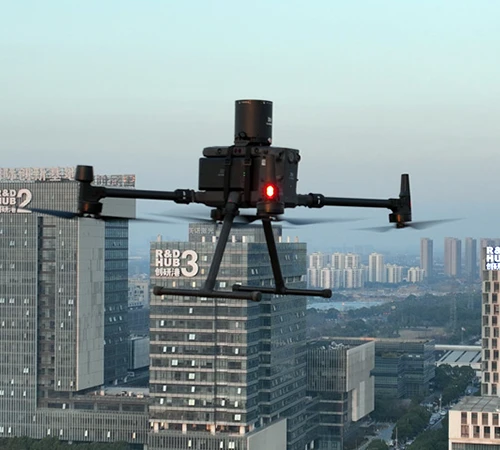
Those in the drone industry have likely all heard the term "drone crash." As drone technology has matured, an increasing number of non-professional users and organizations have begun using drones to perform a wider range of complex tasks. With the widespread adoption of drones, while they provide convenient and efficient services, they also pose numerous safety hazards.
Drones flying in the air are highly susceptible to external environmental factors; air currents, GPS signal interference, and electromagnetic interference all have a critical impact on flight safety. Invisible changes in air currents and air pressure, as well as electromagnetic interference, can all lead to loss of control and a "crash."
The hazards and consequences of a drone "crash" can vary in severity. Small, consumer-grade aerial photography drones are limited by their weight and size, so the threat posed by a crash is relatively minor. However, industrial-grade and professional-use drones are larger and heavier, and the hazards resulting from a crash cannot be ignored!
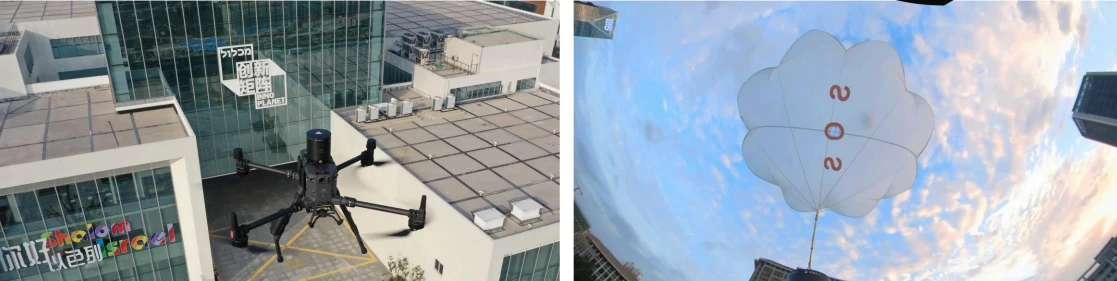
A crash involving a professional-use drone flying over densely populated areas or urban centers poses a significant threat to people and property on the ground; striking vehicles or people can cause fatal injuries, and crashes involving medium- to large-sized drones can also threaten buildings. Although drones flying over forests or open fields are far from populated areas, the threat posed by a "crash" is still immense. Most drones today use lithium-ion batteries as their power source; if a lithium-ion battery ruptures or short-circuits after a "crash," it can easily ignite a fire and trigger a massive forest fire.
The Matternet One logistics drone, a collaboration between Swiss Post and Silicon Valley startup Matternet, was grounded by the Swiss Safety Investigation Board after two crashes. Consequently, it has become both necessary and urgent to improve drone safety and restore public confidence in drones flying overhead. The DSP series drone parachute recovery system from Hong Kong Intlbit Group Limited is designed to address this issue, providing drones with a final line of defense. By mitigating the hazards caused by a drone crash while also minimizing damage to the drone itself, this emergency deceleration and descent system serves as a proven and effective solution!
If you are interested in more information regarding the UAV parachute module systems, we would love to provide more information.