The deployment of drones in fire brigades is based on application scenarios and considers the scientific nature of the configuration.
Large and Medium-sized Brigade-level Configuration Standards
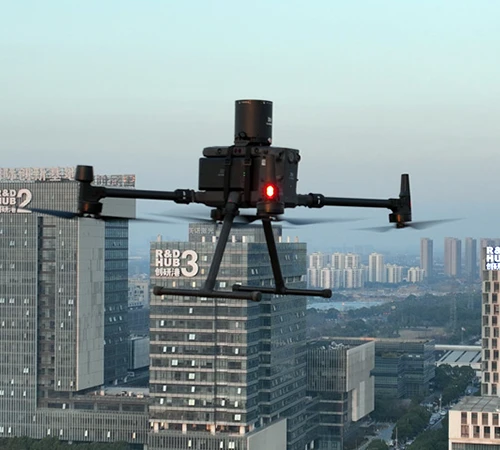
According to the classification of urban fire station construction levels or the standard configuration of elite fire brigades, special operations brigades (medium-sized) can be equipped with individual soldier-carried drones. In addition, some special operations brigades (medium-sized) have piloted the world's first ducted fan high-altitude tethered firefighting drone system, "Aoqin." This system consists of a tethered eight-ducted fan flight platform and a fire truck chassis. It is routinely parked on the fire truck and can quickly reach the fire scene with the first wave of combat forces, engaging in high-rise firefighting operations without complex deployment. Some special operations brigades have deployed large firefighting drones that have passed airworthiness certification, capable of carrying multiple fire extinguishing bombs to deal with special fire scenarios such as those involving hazardous chemicals. They are mainly used for reconnaissance and short-range patrols, and are deployed first in emergency response convoys alongside lead rescue vehicles. Other brigades (medium-sized) with heavier firefighting and rescue missions are selected and configured according to the situation in their jurisdiction.
Standard brigade-level equipment: Brigade-level equipment primarily consists of electric aircraft platforms with long cruising ranges, mainly used for reconnaissance and auxiliary rescue. During emergency response, they should be deployed with the brigade's full-time command headquarters and undertake reconnaissance and auxiliary rescue missions within the city's jurisdiction and during cross-regional reinforcements. Simultaneously, intelligent firefighting drone systems, such as tethered drones supporting multi-aircraft collaborative operations and possessing autonomous control and decision-making capabilities, are gradually being introduced into brigade-level configurations.
Standard brigade-level equipment: Brigade-level equipment primarily consists of fuel-powered drones with long cruising ranges, mainly used for reconnaissance, monitoring, and auxiliary rescue. They are deployed with the brigade's full-time command headquarters and undertake various tasks within the province and during cross-regional reinforcements.
Firefighting drones are unmanned aircraft controlled by radio remote control equipment or autonomous programs, mainly used in firefighting and rescue scenarios such as forest fire monitoring and high-rise building firefighting. Their types include unmanned helicopters, fixed-wing aircraft, and multi-rotor aircraft. They can perform tasks such as fire scene reconnaissance, 3D modeling, material delivery, and remote detection of hazardous gas concentrations, and are characterized by high mobility, speed, and simple maintenance.