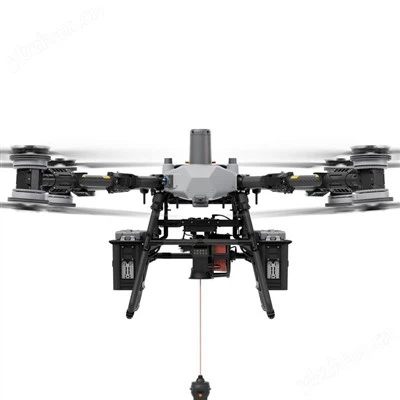
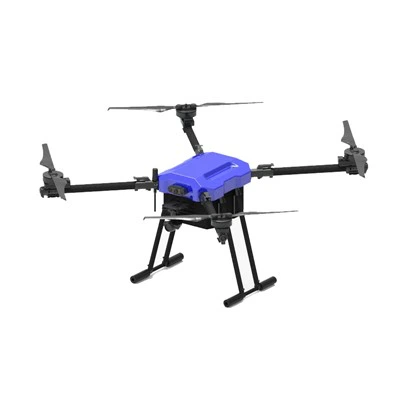
The development prospects of drone delivery have attracted much attention in recent years, becoming a focus of attention for both the logistics industry and the technology sector. Driven by technological advancements, policy support, and market demand, its development prospects are extremely broad.
Technology-Driven: Performance Improvement and Application Innovation
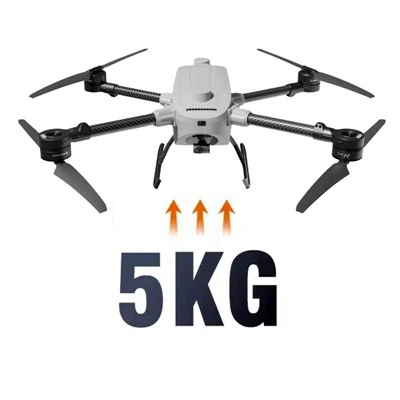
The core of drone delivery lies in its technical performance, including endurance, payload capacity, navigation accuracy, and obstacle avoidance capabilities. In recent years, iterations in battery technology have significantly increased drone range; for example, some models have achieved a maximum range exceeding 50km and a standard speed of 100km/h, which is revolutionary for "last-mile" delivery and the transportation of goods to remote areas. Simultaneously, lightweight design (e.g., an empty weight of 2.5kg) and foldable structures further reduce transportation costs and storage difficulties. The application of artificial intelligence algorithms also makes drone path planning more efficient, more resistant to interference, and adaptable to complex weather and terrain environments.
Policy Support: Open Airspace and Improved Regulations
Many countries worldwide have introduced policies to support drone logistics. For example, the United States, China, and Japan have opened low-altitude airspace and simplified approval processes, providing a legal and regulatory foundation for drone delivery. The Civil Aviation Administration of China's "Interim Regulations on the Flight Management of Civil Unmanned Aerial Vehicles" clearly delineates suitable airspace for drones, promoting industry standardization. The EU's U-Space framework also aims to unify airspace management rules and ensure safe collaboration between drones and manned aviation. These policies not only reduce operational risks but also attract significant investment from companies in technological upgrades and deployment.
Market Demand: Expanding Scenarios and Efficiency Revolution
The application scenarios for drone delivery are continuously expanding. First, in e-commerce logistics, drones can significantly reduce delivery costs and time through emergency replenishment and small-item delivery. For example, during the pandemic, drones enabled "contactless" delivery, avoiding cross-infection. Second, in the field of medical emergency care, drones can quickly deliver medicines, blood samples, and emergency equipment, especially in mountainous areas and disaster zones where transportation is disrupted. Furthermore, in agriculture, drones are used for pesticide spraying and seed sowing, achieving efficiency dozens of times higher than manual labor. Statistics show that the global logistics drone market is projected to exceed $50 billion by 2025, with a compound annual growth rate of 35%.