Having worked in the industrial drone industry for many years, We are often asked by customers why there's such a wide price range among products that are all labeled as "FPV drones." Today, We'll explain this in simple, easy-to-understand terms from the following five perspectives to help you gain a deeper understanding of FPV drones.
1.Definitions
Although FPV drones and racing drones are often used interchangeably, strictly speaking, they are not entirely the same. FPV (First Person View) refers to first-person view flight technology; any drone equipped with FPV equipment can be called an FPV drone. Racing drones, on the other hand, are drones specifically designed for racing and must be equipped with an FPV system. Therefore, all racing drones are FPV drones, but not all FPV drones are racing drones.
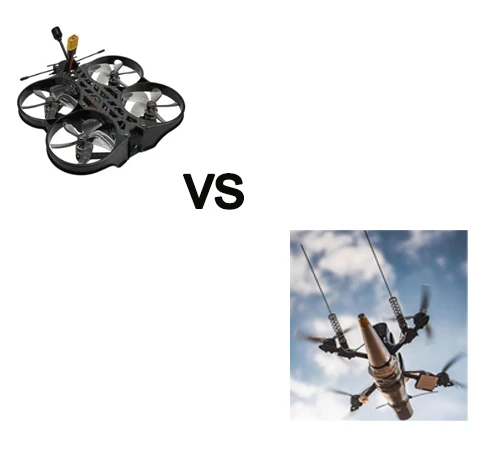
Standard racing drones-commonly referred to as"Racing FPV"-are typically used for competitive sports, aerobatics, or aerial filming for movies and television. They are engineered to achieve the highest possible cornering speeds, thrust-to-weight ratios, and maneuverability.
However, while defensive/reconnaissance-and-strike FPV drones (typically referring to military-modified or tactical suicide/interceptor FPV drones) share the same aerodynamic configuration and underlying hardware, they differ fundamentally in their core missions, payload logic, software tuning, and supply chain ecosystems.
2.Key Differences And Comparison Of Primary Uses
Racing FPV Drones: Used for competitive sports, aerobatics, or aerial filming for movies and TV; designed for maximum cornering speed, thrust-to-weight ratio, and maneuverability.
Defensive FPV Drones: Used for tactical defense, patrols of designated areas, or precision air-to-air/air-to-ground interception; designed for integrated reconnaissance and strike capabilities or terminal damage within specific areas.
3.Payload And Hardware
Racing FPVs: Equipped only with high-definition, low-latency video transmission cameras, lightweight carbon fiber frames, and high-power motors; they do not have-nor require-any mounting capabilities.
Defensive FPVs: Integrated with custom fuses, warheads (such as fragmentation or shaped charge), or countermeasure triggering devices; the frame structure is often reinforced or modified to industrial-grade specifications to accommodate the additional weight.
4.Software And Anti-Interference
Racing drones: Run open-source firmware (such as Betaflight), emphasizing precise handling, low latency, and aggressive power output. Defensive FPV drones: Utilize anti-interference video transmission and specialized communication bands (such as frequency-hopping anti-interception technology); some incorporate simple terminal guidance or specific homing logic.
5.Frames And Structures
Standard FPV Racers:
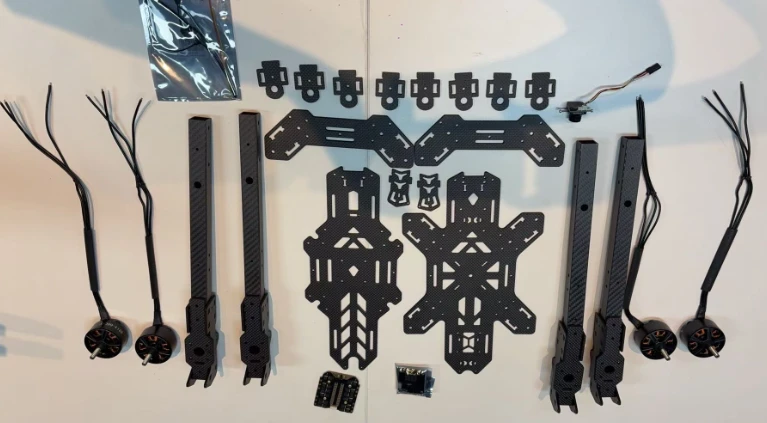
Primarily 5- or 7-inch models; small, open-frame design; thin carbon fiber plates; designed for extreme lightweight; average impact resistance; arms are prone to breaking upon impact; generally no folding design; bare frame weighs a few hundred grams.
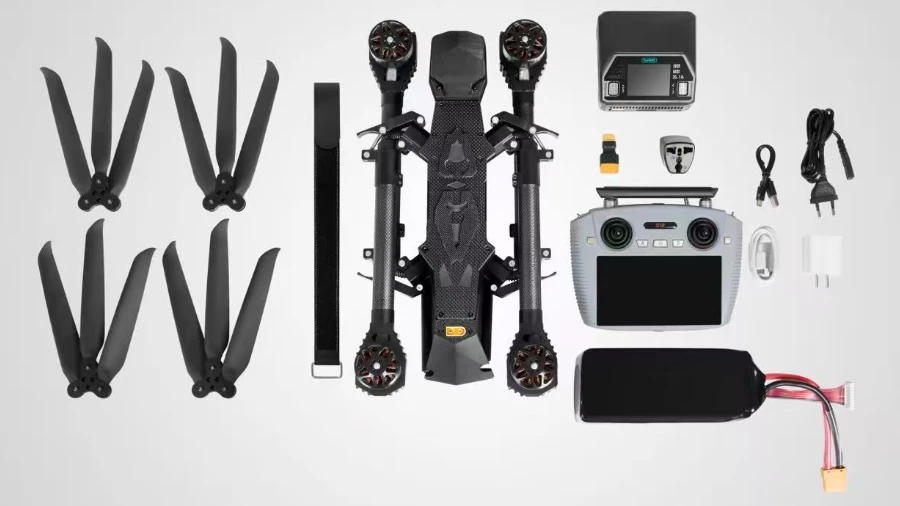
Large-size frame (18-inch propellers), made of 3K T300 high-strength carbon fiber, with thickened arms and reinforced screw structures; many feature folding designs for easy transport; high frame rigidity, offering better wind resistance and impact resistance; bare frame weighs around 4 kg, with multiple load-bearing mounting points integrated into the structure to accommodate heavy impacts.
If you are interested in any kind of FPV drones, welcome to enquiry !