Image Acquisition and Encoding: The UAV camera captures real-time footage, which is then compressed and encoded (e.g., H.264/H.265) by an image processor to reduce data volume. Signal Transmission: The encoded video signal and flight control signals (such as attitude data and battery status) are converted into optical pulses by an optical transceiver and injected into the optical fiber.
Optical signals transmit at near the speed of light in optical fibers, exhibiting strong resistance to electromagnetic interference and making them suitable for complex environments (such as high-voltage lines and thunderstorm areas).
Receiver and Decoder:** The ground station receives the optical signal and converts it back to electrical signals via an optical transceiver. The video signal is decoded and displayed on the FPV device, while control signals are transmitted to the remote controller or ground control software.
Communication (Optional):Some systems support bidirectional fiber optic links, allowing the ground station to acquire real-time drone status (such as altitude, speed, and battery level) and adjust flight parameters.
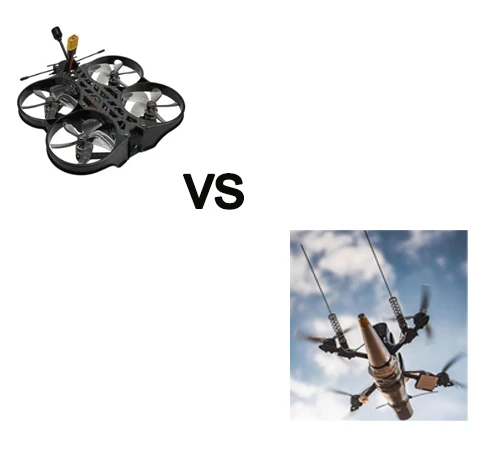
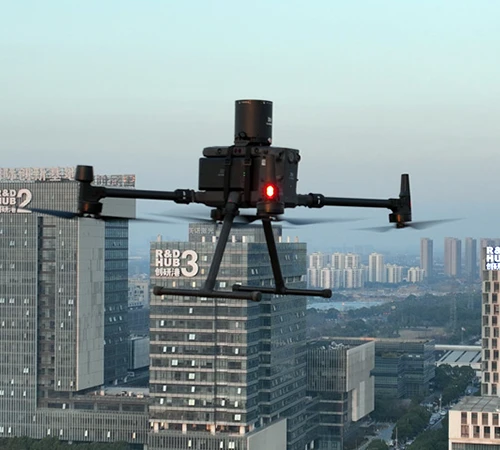
Fiber optic FPV (First Person View) drones transmit images and flight control signals via optical fiber, achieving low-latency, high-stability real-time video transmission and remote control. Its working principle combines the high-speed anti-interference characteristics of fiber optic communication with UAV flight control technology. The following is a detailed analysis of its core principle:
Workflow: During flight, the UAV synchronously releases optical fibers to convert flight video, its own status, and other data into optical signals for transmission back to the ground station. Simultaneously, it receives control commands from the ground station in the form of optical signals. The entire transmission process relies on a closed optical channel, radiating no radio frequency signals externally, resulting in extremely high transmission link stability.