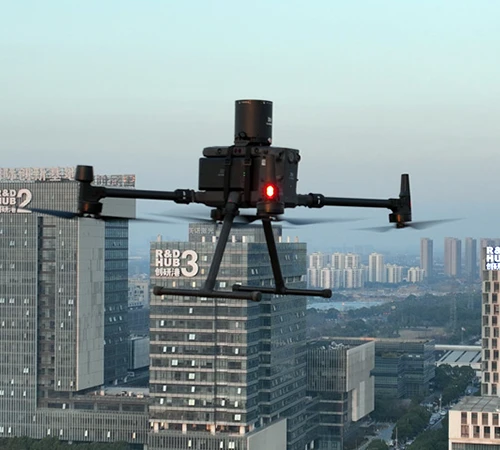
High-altitude tethered cleaning drones are specialized drone systems designed for cleaning the surfaces of high-altitude buildings and large facilities.
Their core feature lies in their connection to a ground power supply or cleaning fluid supply system via a tethering device (usually a high-tensile-strength, lightweight composite cable), enabling long-term hovering and stable operation. This overcomes the limitations of traditional drones, such as short flight time and limited payload capacity, making them particularly suitable for cleaning and maintenance of high-rise building facades, bridges, wind turbine blades, and large billboards.
Technical Principles and Core Components High-altitude tethered cleaning drones typically consist of four parts: a flight platform, a tethering system, a cleaning module, and a ground control station. The flight platform adopts a multi-rotor or compound wing structure and achieves stable hovering through high-precision attitude control algorithms. The tethering system includes a cable retraction device and an electric/hydraulic transmission module. The cable diameter is typically between 3-8mm and can withstand a tensile force of 50-200kg, ensuring a safe distance is maintained even in strong winds (wind speed ≤12) or complex airflow environments. The cleaning module integrates high-pressure nozzles, rotating brushes, or laser cleaning devices, and can switch cleaning modes according to the type of stains (such as dust, oil, rust). The nozzle pressure range is between 10-50MPa and can cover a working surface with a width of 0.5-3 meters. The ground control station monitors the drone's status in real time via wireless communication (usually using 5G or dedicated frequency bands) and can remotely adjust cleaning parameters.